




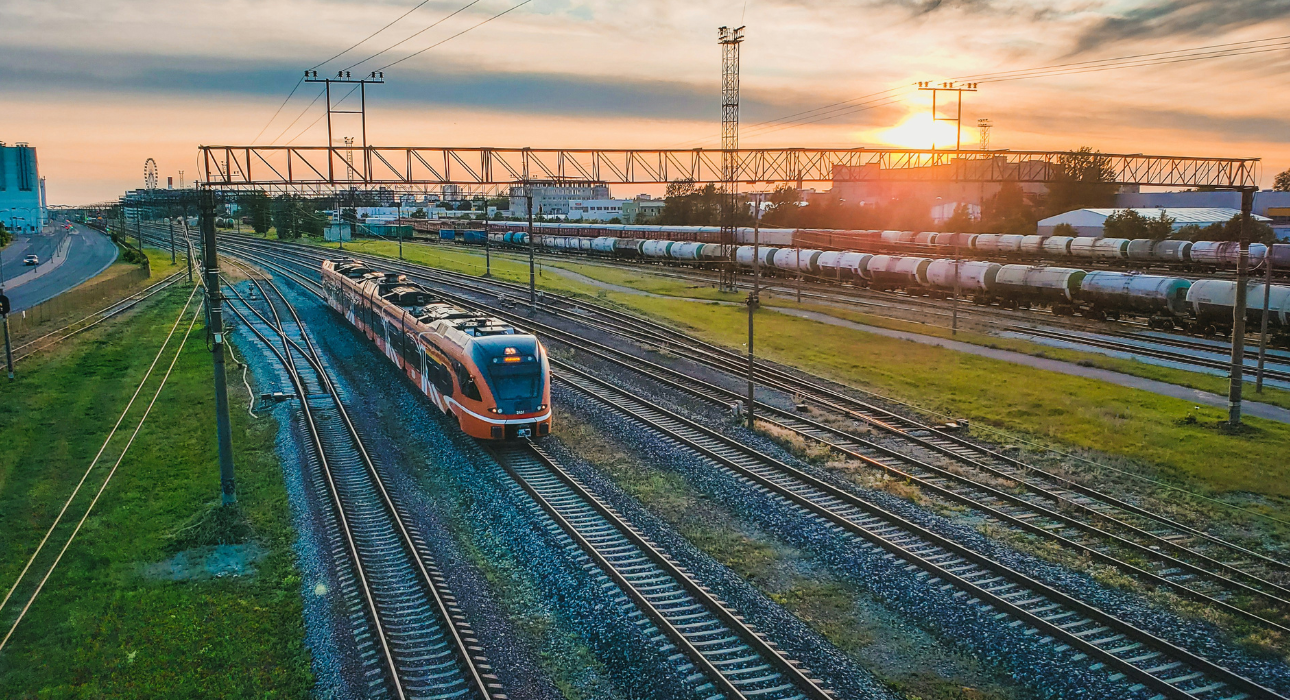
In many nations, high-speed rail has grown from a novelty to the foundation of modern transportation. New machines designed to redefine speed, efficiency, and connectivity have replaced trains, which were once considered to be swift. A comprehensive blog about the ten fastest trains in the world is provided below, along with contextual commentary on how they compare, the technologies that make them possible, and what this means for rail travel in the future.
What qualifies as “fastest”?
It is essential to define precisely what we mean when we say “fastest train” prior to beginning the list.
Key points:
- Operational speed: The speed at which a train travels in commercial service (e.g., on scheduled passenger services).
- Design speed / test speed: Some trains or prototypes can reach higher speeds under controlled test-conditions, but these aren’t always the speeds used in everyday service.
- Type of technology: Conventional wheel-on-rail trains vs. maglev (magnetic levitation) trains. Under ideal circumstances, maglev trains are able to achieve higher speeds and avoid wheel-rail friction. Often lists include a mix of wheel‐rail high-speed trains and maglev trains.
With that in mind, many recent lists of fastest trains in the world compile by operational speeds (or “top in-service speed”) plus known speed records.
The Top 10 Fastest Trains
1. Shanghai Maglev Train [China]
China, a country Operating speed: ~ 460 km/h (≈ 286 mph) according to many sources.
Technology: Maglev — the train levitates using magnetic forces, eliminating wheel‐rail contact friction.
Service: Connects Shanghai Pudong Airport and the outskirts of Shanghai city (Longyang Road).
Why it stands out: It remains the fastest commercial train in regular passenger service. Its levitation and high speed make it a showcase of what rail technology can achieve when built for speed rather than cost-efficiency.
Considerations: Although the line length is relatively short (less than 30 kilometers), the actual average speeds may be lower than the maximum operational speed. Also, cost of maglev infrastructure remains high.
2. CR450AF / CR450 (China)
China, a country Operating/design speed: Reported design speed ~ 450 km/h (≈ 281 mph) and hit test speeds of ~ 453 km/h.
Technology: A CRRC-developed conventional wheel-on-rail high-speed electric multiple unit (EMU).
Why it’s important: This is the next generation of traditional high-speed trains that aim to push the boundaries of what can be done on rail tracks without using maglev.
Status & caveats: While test speeds are very high, full commercial service at those speeds may not yet be widespread; thus caution is needed when comparing to fully operational trains.
3. CR400 Fuxing (China)
Country: China
Operational speed: ~ 350 km/h.
Technology: EMU with wheels on rails. Service: One of China’s flagship high-speed trainsets, deployed on major corridors (e.g., Beijing–Shanghai).
Why included: Though not as fast as the maglev, it is still among the fastest in regular revenue service, and shows how China is scaling high-speed rail.
More broadly, China’s operational speed benchmarks are important globally, and the country already has the largest high-speed rail network in the world.
4. TGV POS / TGV Series (France)
Country: France
Speed record: The TGV achieved a speed of ~ 574.8 km/h (≈ 357 mph) in 2007 trials.
Operational speed: Typical service speeds around ~ 320 km/h.
Technology: Alstom developed a conventional wheel-on-rail high-speed train set for SNCF.
Why notable: The TGV is the pioneer of high-speed rail, and the record run still stands as one of the highest for wheel‐rail.
Insight: The large gap between test speed and commercial/operational speed demonstrates that daily train speeds are constrained by infrastructure, safety, maintenance, and cost.
5. Shinkansen Series Japan
Country: Japan
Operational speed: Typically ~ 320 km/h on some lines.
Technology: Conventional wheel‐on‐rail bullet train.
Legacy: Japan pioneered modern high-speed rail with its Shinkansen “bullet trains” beginning in 1964.
Why included: Even though speeds are lower than the very top entries, the Shinkansen’s reliability, safety record, coverage and service quality are world‐leading.
Additional note: Japan is advancing maglev technology (see L0 Series) but that is not yet in commercial service.
6.Eurostar e320 / High-Speed Europe
Region: United Kingdom / Europe (connects London to Paris, Brussels, Amsterdam etc)
Operational speed: Around ~ 320 km/h.
Technology: Conventional wheel-on-rail high-speed EMU (Siemens Velaro variant)
Why include: The Eurostar e320 is the fastest in the UK/Europe cross-channel segment and shows how high-speed rail isn’t just Asia.
Broader context: Europe has many high‐speed networks (France, Spain, Germany, Italy etc) and the e320 represents the intersection of international rail travel at high speeds.
7.Al Boraq (Morocco)
Country: Morocco
Operational speed: ~ 320 km/h.
Technology: Conventional high-speed EMU, constructed by a European manufacturer.
Why included: Although from a non‐traditional “superpower” in rail, Al Boraq shows high-speed rail’s reach — not just in Asia/Europe but Africa too.
Implication: Emerging markets’ economic development and regional connectivity can benefit greatly from high-speed rail.
8. Renfe AVE Class 103 (Spain)
Spain is a nation.
Speed at work: less than 310 km/h. Technology: Conventional high‐speed EMU (Siemens Velaro variant)
Why notable: Spain has one of the largest high-speed rail networks in the world, and the AVE Class 103 is at the pinnacle of that.
Note for tourism and convenience: High-speed rail is changing how people travel, and this speed greatly benefits the Madrid–Barcelona route.
9. Korail KTX‑Sancheon (South Korea)
Country: South Korea
Operational speed: Around ~ 305 km/h (≈ 190 mph) per recent lists.
Technology: Conventional high‐speed EMU (Korea’s domestic development)
Why included: South Korea’s high-speed rail shows how countries beyond the major heavyweights are adopting high-speed tech and building networks.
Future: South Korea is also investing in ultra-high speed concepts (vacuum tubes, etc) though not yet commercial.
10.Frecciarossa 1000 (ETR 1000) (Italy)
Country: Italy
Operational Speed: Some lists cite ~ 300 km/h (≈ 186 mph) though technical design may allow more.
Technology: Conventional high-speed EMU (Alstom/Bombardier)
Why included: Italy has been an early adopter of high-speed rail (Frecciarossa lines) and the 1000 series is among the fastest in Europe.
Insight: Rather than just top speed, Europe’s high-speed rail systems often place an emphasis on service, connectivity, and station integration.
Key Insights and Trends from the List
- Asia’s talent: The dominance of Asia Asia – especially China – dominates the top of the table. China appears multiple times (Shanghai Maglev, CR450, CR400 Fuxing) showing both scale and ambition. For instance: Asia leads with five spots in one ranking of top 10 fastest high-speed trains.
- Maglev vs. conventional: The highest speeds belong to maglev trains (like Shanghai’s). Conventional wheel‐on‐rail high‐speed trains still dominate internationally for cost/scale reasons. For example, sources show one maglev at ~600 km/h test speed (Japan’s L0) though not yet fully commercial.
- Speed test vs service speed: There’s often a big difference between the record speed (testbed) and regular operational speed. Example: TGV’s record ~574 km/h vs ~320 km/h in service. This demonstrates that everyday trains are unable to consistently reach record speeds due to numerous engineering, safety, infrastructure, and cost constraints.
- Infrastructure, cost & geography matter: Achieving 300 km/h+ service speeds is not just about the train — the track geometry, signalling, maintenance standards, safety systems, noise/air resistance, topography, and cost all matter. For example, curves limit speed, stations slow things down, maintenance costs go up at higher speeds.
High-speed rail is both a technological marvel and a practical tool for modern transit. The most cutting-edge machines, the aforementioned trains, push the limits of comfort, efficiency, and speed. But it’s not just about the numbers: real-world utility depends on how these trains integrate into the wider network (stations, connectivity, frequency, cost) and how the tracks and infrastructure support sustained high speeds. For countries like India, observing how other systems are built and how speed thresholds are chosen (300 km/h vs 350 km/h vs maglev) can help inform how best to deploy future high-speed corridors. Raw top speed is impressive, but the journey-time reduction, reliability, safety, comfort and cost-effectiveness are what travellers really care about.