How people feel about AI depends almost entirely on how close they are to it. In San Francisco, AI feels like a 10/10 disruption. Founders are rebuilding companies around it, questioning whether their current business will even survive the next year. The mood is intense, almost existential.
In places like Norway, among highly technical teams, it feels different still important, still transformative, but more like a 7/10 shift. There is curiosity and experimentation, not panic.
Outside of tech entirely, the reality is even more muted. Many people are still treating AI as a tool for writing emails or summarising notes. Useful, but not world-changing.
The gap between these perspectives is the story. AI is not arriving evenly. It depends on where you stand.
Two Versions of AI: Tool vs Co-Founder
For most people, AI still looks like a productivity assistant. It helps write, summarise, translate, and automate small tasks. In this version of reality, AI is helpful but replaceable.
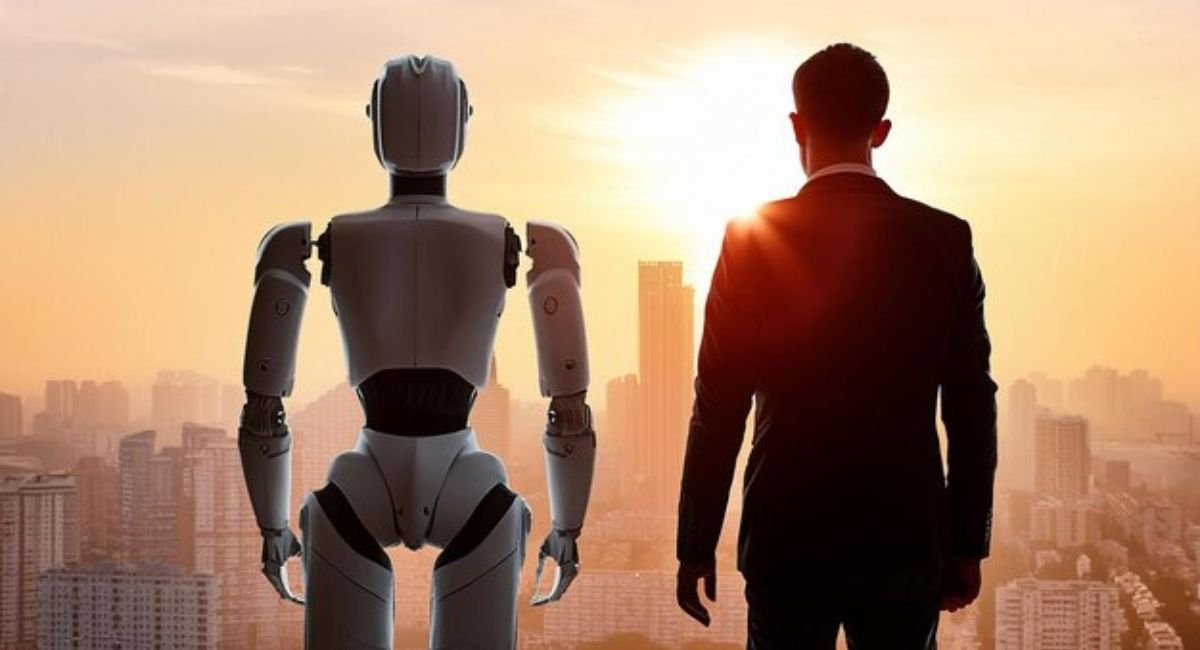
For others, especially inside startups and advanced engineering teams, AI is starting to behave less like a tool and more like a co-founder. It contributes to decisions, builds prototypes, writes production code, and even helps shape strategy.
This is where the tension begins: is AI just speeding up work, or is it fundamentally changing who (or what) does the work? The answer right now is ‘both’ but unevenly distributed.
Hype: AI as Instant Transformation
There’s a strong belief that AI will quickly replace large parts of human work, pushing companies to adopt it urgently or risk falling behind.
Boards and executives are driving rapid AI investment, sometimes prioritising it over hiring. This creates momentum but also confusion.
The gap is clear: boards often overestimate how fast AI can replace human work, while CEOs closer to execution expect slower, more gradual impact. The result is high expectations at the top and uncertainty on the ground.
The Reality: AI Still Has Boundaries
Despite the hype, most AI use today is still early-stage. It improves efficiency by automating tasks and supporting decisions, but rarely replaces entire roles or systems.
Even advanced agentic AI is just starting to move from demos into real use. In industries, it can speed up engineering work and reduce manual effort, but it still operates under strict rules and human oversight.
Where the Real Shift Is Happening
The key change isn’t AI replacing humans; it’s compressing work. Tasks that once took teams or weeks can now be handled in minutes or significantly accelerated.
This shifts humans from doing the work to directing it: defining problems, setting constraints, and reviewing outputs while AI handles execution. That’s where the “co-founder” idea starts to make sense, not because AI has intent, but because it now meaningfully participates in execution.
The Gap Between Perception and Capability
The biggest misunderstanding around AI is not technical; it is psychological.
Boards often believe AI can replace humans faster than it actually can.
Executives often expect ROI faster than systems can deliver it.
Non-technical users often underestimate its broader impact entirely.
All three perspectives are partially wrong, just in different directions.
AI is not a sudden replacement event. It is a gradual redistribution of capability starting with augmentation, moving toward delegation, and eventually reaching partial autonomy in narrow domains.
What This Means for Startups and Big Companies
For startups, AI dramatically increases speed. Small teams can build, test, and scale like much larger organisations, with AI acting like an always-on co-founder that accelerates execution and iteration. Over time, the advantage shifts from access to AI to how effectively it is used.
For big companies, adoption is harder. They are trying to fit AI into systems built for human workflows, which slows experimentation and creates friction. Leadership pressure for fast results often clashes with the reality that real transformation takes time.
AI isn’t a single, sudden revolution; it’s a gradient unfolding at different speeds for different people. To some, it still looks like a productivity tool. To others, it already feels like a structural shift in how companies are built and run. The truth sits in between. AI isn’t a full co-founder yet, but it’s no longer just a tool either. It is steadily moving from assisting work to actively shaping how work gets done.