



As a manufacturing powerhouse, China’s economy thrives, and its goods appear to be everywhere. On a wide range of products, the majority of labels, stickers, and tags state, “Made in China.” Western consumers might therefore understandably wonder, “Why is everything made in China?” Although there are those who believe that the abundance of cheap Chinese labor that lowers production costs is to blame for the widespread availability of Chinese goods, there is much more to the story. In addition to its low labor costs, China has become known as “the world’s factory” because of its low wages, strong business ecosystem, relatively lax commercial regulations, low taxes and duties, and competitive currency practices.
A complex combination of economic strategy, scale, efficiency, and government policy provides the answer. Let’s take a look at the main factors that led to China’s low-cost manufacturing miracle.
Lower Salaries
- China is home to approximately 1.41 billion people, making it the most populous country in the world.The law of supply and demand tells us that since the supply of workers is greater than the demand for low-wage workers, wages stay low. In addition, until the latter part of the 20th century, when internal migration flipped the country’s rural-to-urban distribution, the majority of Chinese lived in rural areas and belonged to the lower middle class or were poor. Many of these immigrants who have settled in industrial cities are willing to work a lot of shifts for low wages.
- China has lower minimum wages and child labor laws than other industrialized nations.
- However, the situation appears to be improving, as more provinces have increased minimum wages in response to rising living costs. The hourly minimum wage and the monthly minimum wage—which does not include any additional payments for overtime, night shifts, or weekend work—are the two minimum wages in place. Both are set by provincial governments, who periodically adjust the minimum wage. As of 2025, among 31 province-level governments, Shanghai will have the highest hourly minimum wage (RMB 2,690, or US$370 per month), while Beijing will have the highest hourly minimum wage (26.4, or US$3.70).
China Briefing. “A Guide to China’s Minimum Wages as of January 24, 2025.” China’s large labor pool makes it possible to produce in bulk, meet seasonal industry needs, and even meet sudden spikes in demand.
Lower Regulatory Requirements
- Manufacturers in most industrial economies have to navigate a labyrinth of regulations covering consumer protection, workplace safety, labor laws, and protection of the environment. As a relative newcomer to the world industrial economy, China’s regulations are not as strict as those in other countries.
- In the past, Chinese factories have not provided workers with compensation insurance, used child labor, or had long shifts. As the economy developed, the Chinese government instituted reforms that protect workers’ rights and provide for fairer compensation. However, change has been slow and compliance is low in many industries. Furthermore, environmental protection regulations are frequently disregarded, allowing Chinese factories to save money on waste management.
Export Promotions and Support from the Government
- Manufacturers are supported by the Chinese government actively. Export subsidies and tax rebates help keep product prices competitive. Investing in infrastructure, such as highways, ports, and power grids, reduces factories’ operational costs.
- The Chinese yuan has sometimes been kept relatively low by favorable currency policies, making exports cheaper on international markets.
Chinese manufacturers benefit from a pricing advantage that goes beyond just labor and material costs thanks to this combination of policy and planning.
America and China Tariffs
- During Donald Trump’s first term as president, the United States announced tariffs on 818 imported Chinese goods worth $34 billion in July 2018. As of February 2020, this was the first of many rounds of tariffs imposed by both countries, with $550 billion in tariffs imposed by the United States on Chinese goods and $185 billion imposed by China on American goods.
- In 2021, when then-President Joe Biden took office, China’s Foreign Minister Wang Yi demanded that multiple tariffs be lifted. Tariff reduction was a topic of ongoing discussion all through the Biden administration. President Biden and the then-U.S. Treasury Secretary Janet Yellen stated that easing tariffs with China could have positive implications on domestic inflation concerns.
The Biden administration announced tariff increases for some Chinese-made goods in 2024. After returning to office in January 2025, President Trump has threatened—but not yet imposed—new tariffs against China.
Access to Suppliers of Components and Raw Materials
- In China’s manufacturing ecosystem, resources and components are just as important as labor. Rare earth elements and metals, which are necessary for machinery and electronics, can be found in abundance in the country. Where domestic supplies fall short, strong trade partnerships ensure steady imports of raw materials at favorable rates.
- Because components are sourced in bulk and often produced domestically, input costs remain lower than in many other manufacturing nations.
Automation and technology
- Ironically, China’s cheap products don’t come just from cheap labor — they also come from advanced automation.
- To reduce human error and waste, many Chinese factories employ robotics, artificial intelligence, and intelligent manufacturing systems. Automation drives efficiency and consistency, allowing mass production at lower long-term costs.
- This high-tech efficiency allows China to maintain low prices even as labor costs rise.
Strong infrastructure for exports
China has made significant investments in logistics and transportation:
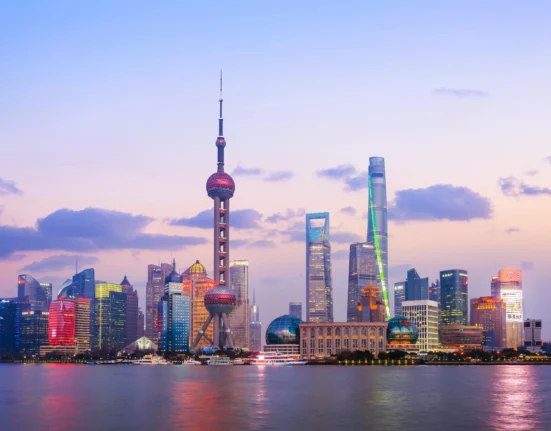
- Shanghai and Ningbo, two world-class ports, handle a lot of goods quickly and cheaply. Reduced freight times and costs are achieved by connecting rail and shipping networks seamlessly to Europe, Africa, and other regions.
- E-commerce logistics in the nation are among the world’s most effective, led by Alibaba and JD.com. Lower export costs and quicker delivery are directly attributed to this logistical dominance.
Drawbacks of China Manufacturing
While there are undeniable cost advantages to manufacturing in China, there are a number of drawbacks to keep in mind when choosing to source goods from this nation.
- Negative Working Conditions: Some factories’ labor conditions continue to cause concern despite China’s expanding economy. Still, a lot of Chinese manufacturers rely on low-paid, often untrained workers. The quality of the products produced can be negatively impacted by this reliance, which can lead to worker exploitation, extended working hours, and safety risks.
- Environmental Preoccupations: Environmental sustainability frequently suffers as a result of China’s rapid industrialization. There is a possibility that factories in some areas do not adhere to the same environmental regulations as those in other nations, which can result in the contamination of manufactured goods.
- Issues with Quality Control: Even though China is home to a lot of world-class manufacturers, quality control can be very different from factory to factory. Volume and cost reduction may be prioritized by some low-cost manufacturers, which may compromise product quality. Products that require high precision and quality, such as luxury fashion items or electronics, are particularly vulnerable to this issue.
Conclusion
A potent combination of scale, efficiency, government policy, skilled labor, and logistics infrastructure enables China to produce inexpensive goods. It has been perfecting the art of cost-effective manufacturing for four decades, influencing global consumer habits and business strategies. China’s low cost and technological sophistication ensure that its label remains one of the most well-known and trusted in the global economy even as the world’s supply chains change.