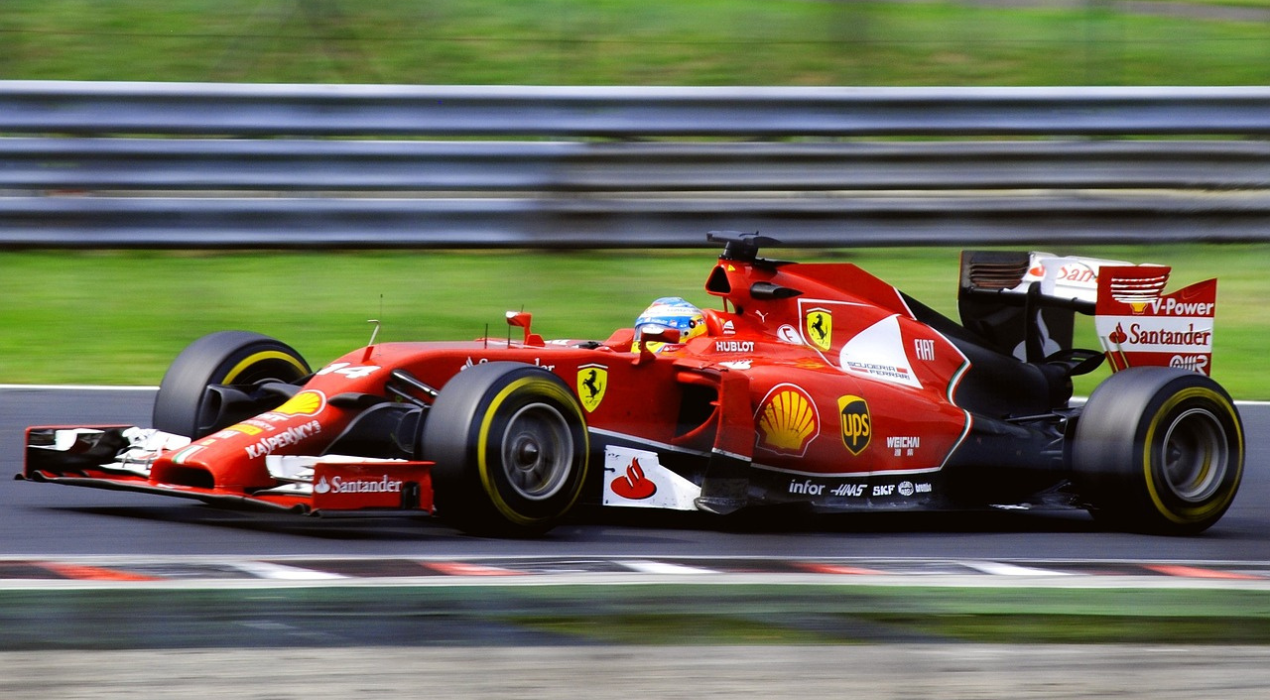
The highest level of international open-wheel, single-seater auto racing is Formula 1 (F1). Teams compete in a series of Grands Prix races all over the world. The name “formula” comes from a set of rules all cars must follow, and the competition awards both a world championship for individual drivers and a separate one for the constructors (teams). High speeds (over 200 mph), cutting-edge engineering, and the strategic collaboration required for both car design and race strategy are all hallmarks of Formula One.
The majority of Formula 1 (F1) fans pay attention to the speed, aerodynamics, or engine power of the cars. However, one of the most crucial elements that often goes unnoticed is the tires. These black rubber rings, which appear to be simple, are engineering marvels made to withstand high speeds, temperatures, and cornering forces. Let’s take a deep dive into the types of tires used in F1 and why they matter so much.
Why Tires Matters in F1
In F1, the tires are literally the only contact point between the car and the track. They influence acceleration, braking, cornering, and overall performance. A car with the best engine or aerodynamics will still struggle if the tires aren’t optimized for the conditions. F1 tires are designed to deliver maximum grip while balancing durability and strategy, which is why tire choice can make or break a race.
So, Tires for F1 must:
- Deliver maximum grip in various track conditions.
- Handle high speeds (some tracks can go up to 350 km/h)
- Withstand significant lateral forces when cornering.
- Degrade in a predictable way to allow strategic planning.
Without the right tires at the right time, a car’s performance suffers drastically. In modern Formula One, tire selection, pit stop strategy, and tire management play such an important role.
The Tire Supplier
Pirelli has been Formula 1’s sole tire supplier since 2011. Pirelli provides teams with several types of tires, each engineered for specific track conditions and weather scenarios. Slicks, or tires designed for use in dry conditions, and wet tires are the most important categories. Pirelli factored in more than 10,000 hours of indoor testing, 5,000 hours of simulation and 70 virtually developed prototypes to create 30 different specifications, which were then tested by teams across more than 20,000 kilometres. Further successful tweaks were made through 2023 and 2024.
The Slick Tires [Dry Weather]
Slick tires have a smooth surface with no tread patterns. In dry conditions, this provides the highest level of grip by maximizing the contact patch with the track. Based on how soft they are, Pirelli divides slick tires into different compounds:
- C1 (Hardest): Long-lasting and durable, but slower than softer compounds in terms of grip. ideal for long stints or tracks with abrasiveness.
- C2, C3, C4 (Medium) : Balanced grip and durability; often used as the default tire in many races.
- C5: the softest, has the greatest grip but quickly wears out. used during races for short, aggressive stints or qualifying laps.
From C1 to C5, three dry-weather tires are selected each race weekend in Formula One. Teams must strategically decide which compound to use to balance speed and tire longevity.
Key Points About Slicks:
- Softer compounds offer better grip but wear out quickly.
- Compounds that are harder last longer but slow down.
- Teams must strike a balance between lap times and tire life.
For instance, softer tires may be preferred for qualifying at circuits such as Monaco, where overtaking is challenging. Conversely, at abrasive tracks like Silverstone, harder compounds may be chosen to avoid multiple pit stops.
Wet Slicks
Tires that are wet Slicks become hazardous when it rains because they are unable to disperse water. That’s where wet tires come in. Wet tires have grooves that channel water away from the contact patch, reducing the risk of hydroplaning. There are two main types of Pirelli wet tires:
Intermediate Tires
- For tracks that are only partially wet or rainy.
- Shallow grooves that allow water dispersion but maintain some slick-like performance.
- Frequently utilized during brief rainstorms or drying tracks.
Full wet tires
- For heavy rain conditions.
- Deep grooves designed for maximum water displacement.
- Provide safety and control even in extreme wet conditions.
Fun fact: A single tire change can significantly alter the outcome of a race in wet conditions. Drivers must rely on skill, precision, and team strategy to avoid mistakes on slippery tracks.
Tire Strategy in F1
Tire selection is more than a technical choice—it’s a strategic decision that can make or break a race. Teams need to think about:
- Starting Tire Compound: Some races require drivers to start with the tire they used in qualifying, which affects early strategy.
- Pit Stop Timing: Choosing the optimal moment to change tires can gain crucial seconds.
- Weather Forecasting: Rain or changing track temperatures require flexible planning.
Example: In the 2021 Hungarian Grand Prix, Lewis Hamilton and other drivers had to carefully switch between slicks and intermediates as sudden rain showers hit, showing how tire strategy can influence a race outcome dramatically.
Additional Consideration: Tire degradation is also critical. Using telemetry, teams monitor the wear of the tires lap by lap to ensure that drivers maximize speed without losing grip prematurely.
What is the Science behind F1 Tires
Advanced materials science led to the development of F1 tires. They are designed to work best at temperatures between 80 and 110 degrees Celsius (176 and 230 degrees Fahrenheit). If it’s too cold, the tires won’t stick, and if it’s too hot, they’ll break down quickly. Other aspects of engineering include: Pressure on the tires has been precisely adjusted to achieve a balance between speed and grip.
- Camber Angles: The wheel’s tilt influences wear patterns and contact with the track.
- Telemetry Monitoring: Temperature, pressure, and wear data are transmitted in real time by sensors in tires.
- Problem for engineers: Tires need to be able to degrade in a predictable manner. Too quickly, teams must make additional pit stops; too slowly, strategic opportunities are lost.
Conclusion
Tires in Formula 1 are far more than rubber—they are precision-engineered tools that combine science, strategy, and skill. From the blistering grip of soft slicks to the deep grooves of full wet tires, each choice carries risk and reward. A driver’s speed, a team’s strategy, and even the outcome of a championship can hinge on understanding and managing tires perfectly.
In F1, tires aren’t just accessories—they are the lifeline of every car, the unsung heroes that translate engineering brilliance into thrilling performance on the track.