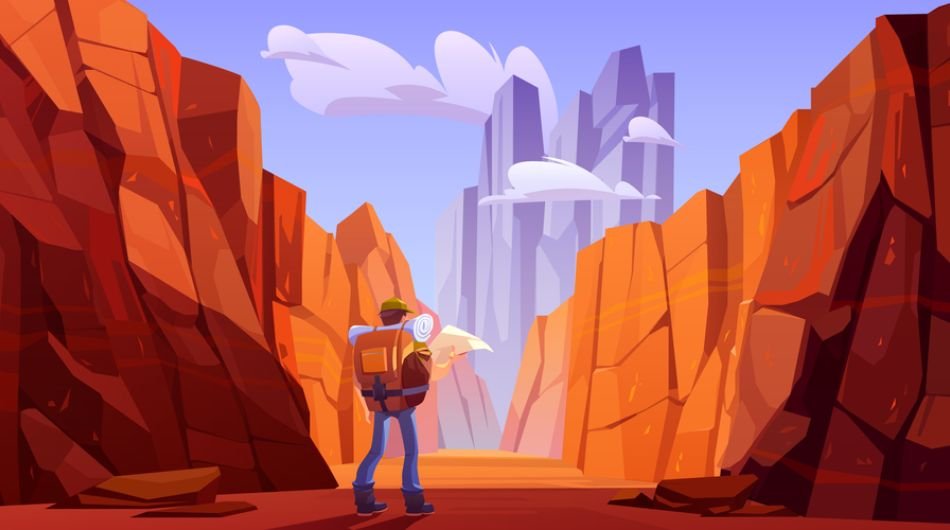
A canyon is a deep, steep-sided valley formed over millions of years by the erosive power of rivers cutting through resistant rock layers. While “canyon” is widely used in North America, terms like “gorge” and “ravine” are more common in Europe and Oceania. These striking landforms vary in type and structure, including box canyons, slot canyons, mountain canyons, and even submarine canyons hidden beneath the ocean floor.
Canyons, also referred to as a gorge, are among the most dramatic geological features on Earth, showcasing the immense power of natural forces over time. Their towering cliffs, winding rivers, and layered rock formations reveal valuable insights into the planet’s history and evolution. Many canyons also support diverse ecosystems, from arid desert vegetation to lush forests and unique wildlife habitats.
From the rugged peaks of the Himalayas to the vast landscapes of the Americas and Africa, the world’s deepest canyons offer breathtaking scenery and unforgettable experiences.
Did You Know?
- Some canyons are older than the mountains they cut through. For example, the Kali Gandaki Gorge existed before the Himalayas fully rose, continuing to carve its path as the mountains formed.
- The world’s deepest canyon, Yarlung Tsangpo Grand Canyon, is so deep that its vertical drop exceeds the height of many mountains.
- Not all “canyons” are technically canyons—some, like famous formations, may actually be valleys or amphitheatres formed by different geological processes.
- Many canyons reveal millions to billions of years of Earth’s history through visible rock layers.
Below is a list of the 10 deepest canyons in the world, ranked based on their maximum depth.
1. Yarlung Tsangpo Grand Canyon
The deepest canyon on Earth, this gorge is carved by the Yarlung Tsangpo River as it bends dramatically around Namcha Barwa. Stretching over 500 km, it is even longer than the Grand Canyon. Its extreme elevation changes create a rare ecological gradient from icy Himalayan peaks to dense subtropical forests, making it one of the most biodiverse regions on the planet. Due to its remoteness and rugged terrain, much of the canyon remains unexplored, adding to its mystique.
2. Kali Gandaki Gorge
Flowing between Dhaulagiri and Annapurna I, this gorge is often considered the deepest when measured from peak to riverbed. The Kali Gandaki River predates the Himalayas, carving its path as the mountains rose around it. Historically, it served as a vital trade route between India and Tibet, and today it forms part of the famous Annapurna trekking circuit, blending natural grandeur with cultural richness.
3. Indus River Gorge
This massive gorge forms as the Indus River curves around Nanga Parbat. The canyon exposes deep layers of Earth’s crust, offering scientists a rare glimpse into tectonic processes caused by the collision of the Indian and Eurasian plates. Its scale and geological significance make it one of the most important natural laboratories in the world.
4. Tiger Leaping Gorge
Carved by the Jinsha River, this gorge lies between Jade Dragon Snow Mountain and Haba Snow Mountain. Legend says a tiger once leaped across the river at its narrowest point. Today, it is one of China’s most popular hiking destinations, known for dramatic cliffs, roaring rapids, and breathtaking mountain scenery.
5. Cotahuasi Canyon
Located deep in the Andes, this canyon is formed between the volcanic peaks of Coropuna and Solimana. It is part of a protected landscape reserve featuring diverse ecosystems, ancient agricultural terraces, and traditional Andean communities. Its remoteness keeps it relatively untouched, offering a raw and authentic natural experience.
6. Colca Canyon
Twice as deep as the Grand Canyon, Colca Canyon is famous for the उड़ान of the Andean condor, one of the largest flying birds in the world. The canyon also features centuries-old farming terraces still used by local communities, showcasing a unique blend of natural beauty and human heritage.
7. Hells Canyon
Carved by the Snake River, this is the deepest canyon in North America. Its rugged terrain, colourful rock formations, and wild river currents make it a prime destination for rafting, hiking, and fishing. The canyon is part of a protected recreation area, preserving its untouched wilderness.
8. Grand Canyon
One of the most iconic landscapes on Earth, the Grand Canyon was carved by the Colorado River over millions of years. Its vast size and layered rock formations reveal nearly two billion years of geological history. It is also home to diverse wildlife and holds cultural significance for Native American tribes.
9. Copper Canyon
A vast network of six canyons in the Sierra Madre Occidental, Copper Canyon is larger than the Grand Canyon in total area. It is rich in biodiversity and home to indigenous communities like the Tarahumara. The famous Chihuahua-Pacific Railway offers one of the most scenic train journeys in the world through this rugged terrain.
10. Tara River Canyon
The deepest canyon in Europe, this stunning gorge features crystal-clear waters, steep cliffs, and over 80 caves. Located within Durmitor National Park, a UNESCO World Heritage Site, it is a hotspot for whitewater rafting and eco-tourism.
Best Activities to Do in Canyons
Canyons are also perfect destinations for adventure and exploration. Visitors can enjoy a wide range of activities depending on the terrain and location.
- Hiking: Many canyons offer world-class trekking routes with stunning views. Trails in Tiger Leaping Gorge are especially popular among hikers for their dramatic cliffs and scenic landscapes.
- Whitewater Rafting: Fast-flowing rivers make canyons ideal for rafting. The crystal-clear waters of Tara River Canyon are famous for thrilling rafting experiences.
- Wildlife Spotting: Several canyons are rich in biodiversity. In Colca Canyon, visitors can witness the majestic flight of the Andean condor soaring above the canyon.
- Photography & Sightseeing: The dramatic rock formations, layered cliffs, and changing light conditions make canyons a paradise for photographers.
- Rock Climbing & Camping: Many deep canyons offer opportunities for rock climbing and overnight camping, providing a closer connection with nature.
The world’s deepest canyons are powerful reminders of nature’s ability to shape the Earth over millions of years. From the immense depths of the Yarlung Tsangpo Grand Canyon to the iconic beauty of the Grand Canyon, each of these natural wonders tells a unique story of geological transformation, cultural significance, and ecological diversity.
Beyond their sheer depth, these canyons are living landscapes—home to rare wildlife, ancient traditions, and breathtaking scenery. Some cut through towering mountain ranges like the Kali Gandaki Gorge, while others reveal layers of Earth’s history carved by rivers over time. Together, they showcase the incredible scale and beauty of our planet.