The grocery industry is undergoing one of the most profound transformations in its history. What was once a largely in-store, routine activity has rapidly evolved into a digitally driven experience. Accelerated by the COVID-19 pandemic, online grocery shopping has shifted from a convenience to a necessity and now to an expectation. Even as global economies face inflation, rising interest rates, and uncertainty, there is no indication that consumers will return to pre-pandemic shopping habits. Instead, the future of grocery shopping is firmly rooted in digital innovation and seamless integration between online and offline channels.
The pandemic accelerated online grocery adoption, turning it into a lasting habit. Today, about 22% of consumers use online grocery services, with millions shopping weekly. Experts predict this trend will continue, with online grocery market share reaching 35–50% in major European countries by 2050.
Rise of the Omni-Channel Model
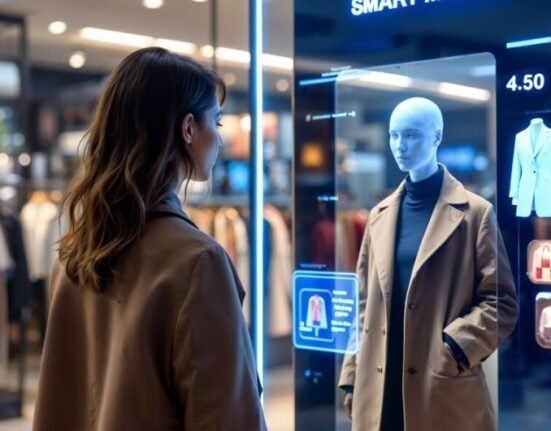
At the heart of this transformation lies the shift toward an omni-channel business model. Future grocery retail will no longer separate physical stores from digital platforms. Instead, successful retailers will integrate both into a unified experience.
Consumers increasingly expect the following:
- Seamless transitions between online and in-store shopping
- Flexible fulfillment options like home delivery or curbside pickup
- Fast and efficient checkout and delivery
- Mobile-first accessibility
- Diverse and convenient payment methods
- Models such as “buy online, pick up in-store” (BOPIS) exemplify this integration, blending the convenience of digital ordering with the immediacy of physical retail.
Technology as a Game Changer
Technological advancements are playing a central role in shaping the future of online grocery shopping.
- Artificial intelligence (AI), machine learning, and advanced analytics are enabling retailers to deliver highly personalised experiences. These tools are enhancing both customer satisfaction and operational efficiency.
- Mobile apps, voice-activated shopping, and real-time inventory systems are further streamlining the shopping journey. Meanwhile, innovations in logistics such as micro-fulfilment centres and AI-optimised delivery routes are improving speed and reducing costs.
- In the future, emerging technologies like autonomous delivery vehicles and drones could revolutionise last-mile delivery, making it faster, cheaper, and more sustainable.
New Business Models and Consumer Trends
The evolution of online grocery shopping is also giving rise to new business models that cater to changing consumer needs:
- Subscription services: Regular deliveries of essential items provide convenience and predictable revenue for retailers.
- Quick commerce: Ultra-fast delivery services, often within hours, are becoming increasingly popular in urban areas.
- Health and wellness offerings: Consumers are seeking organic, gluten-free, and plant-based products, driving retailers to expand specialised assortments.
- Sustainability-focused shopping: Ethical sourcing, eco-friendly packaging, and carbon-neutral delivery options are becoming key differentiators.
These trends reflect a broader shift toward convenience, personalisation, and values-driven consumption.
Challenges on the Road Ahead
Despite its rapid growth, online grocery retail faces several challenges. Managing perishable goods, ensuring accurate order fulfilment, and maintaining product freshness require sophisticated logistics and infrastructure. Additionally, real-time inventory management is critical to avoid stockouts and customer dissatisfaction.
Competition is another major hurdle. As more players enter the market, pricing pressure increases, making profitability difficult to achieve. Retailers must balance competitive pricing with sustainable margins while continuing to invest in innovation.
Path to Profitability
Encouragingly, around 90% of industry experts believe that online grocery will become profitable by 2030. Achieving this will require a dual strategy:
- Increasing sales and improving margins
- Reducing operational costs
- Key approaches include:
- Automating warehouses and fulfillment processes
- Optimizing last-mile delivery
- Offering lean product assortments tailored for online sales
- Implementing cost-efficient packaging and payment solutions
- Retailers must rethink their entire value chain to succeed in this new environment.
The future of grocery shopping is digital, integrated, and customer-focused. Physical stores will remain relevant, but online services will continue to grow in importance. Retailers that invest in technology and adopt omni-channel strategies will stay competitive, while others risk falling behind. behind. Success will depend on how seamlessly businesses connect online and offline experiences.