



The automotive world is experiencing the most substantial change since Henry Ford industrialized manufacturing a century ago. The current transformation must be triggered not only by extensive technology development but also by social demand. Accessible mobility appears to be the future of mobility solutions, which will be more adaptable, individualized, and compatible. Let’s consider what innovations are driving this new automotive revolution.
An Overview of the Most Recent Trends in the Automotive Industry. The present-day automotive industry is affected by innovative ideas and is ready to transform and evolve rapidly. Current automotive trends are encouraging automotive manufacturers to offer consumers much more than a metal box on four wheels. Whereas for the past 100 years, carmakers were largely focused on enhancing manufacturing to become more efficient at scale, the future is about redefining the role of the vehicle—now it’s more like a smartphone or computer on wheels.
New opportunities arise from the automotive sector’s new technology. AI, additive manufacturing, the Internet of Things, and 5G have become sources of product innovation and manufacturing efficiency, which in turn has led to revolutionary changes in customer experience. Finally, automotive manufacturers are increasingly adopting PMO software to standardise the execution of complex projects with globally distributed teams and ensure compliance with industry standards.
5 Future Trends in the Automotive Industry
In 2025, electrification and software integration will have an essential impact on the automotive industry. We expect to see the following automobile trends next year.
Electric Cars
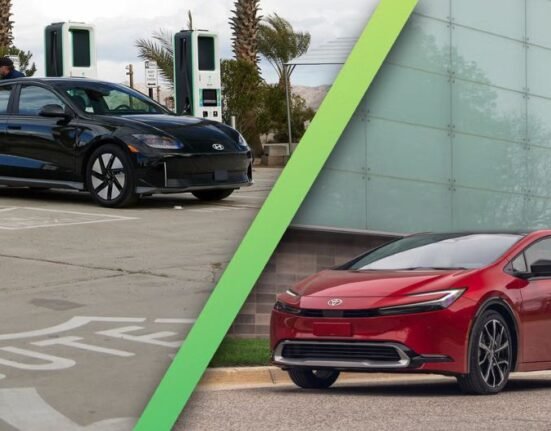
One of the most prominent trends in the automobile industry in recent years has been the worldwide transition to electric vehicles. The development of zero-emission vehicle technology and the rise in demand for cleaner, greener electric vehicles (EVs) and hybrid electric vehicles (HEVs) are both attributed to environmental factors. The battery technology and charging infrastructure required for electric vehicles are also evolving—for example, lithium-ion batteries that have certain limitations can now be replaced by solid-state batteries that have higher energy density and are safer, more stable, and cost-effective.
Challenges:
Despite optimistic forecasts, 2025 will be marked by EVs’ slowdown. The following factors account for this:
China-West trade frictions that continue; competition with Chinese EVs; problems with the infrastructure (such as a lack of charging stations or problems with the supply chain); manufacturing expenses associated with electric vehicles and their high prices for customers.
As a result, automotive manufacturers are expected to switch to producing hybrid models—they are cheaper and more adaptable.
Hybrid vehicles are becoming increasingly popular—they combine electric power with the reliability of a combustion engine. Compared to EVs, they don’t require charging, but at the same time, they reduce carbon emissions.
The rise of EV manufacturers in China. In 2025, China is going to remain a leading manufacturer of electric vehicles. Currently, they sell most of the EVs worldwide, and this year, they are expected to market more EVs than combustion engine vehicles.
Software-Defined Vehicles
Software-defined vehicles are those that use software to conduct all operations (braking, driving, steering, providing infotainment, etc.). This software should be regularly updated to let users take advantage of the latest technological advancements and enhance vehicle performance. This trend is gaining traction in 2025: at the recent Consumer Electronics Show, the event that showcases technological innovations across industries, software-defined vehicles were in the limelight. As a result, automakers will continue to produce more SDVs in the years to come.
For example, Honda is going to partner with Amazon Web Services to improve data collection and software updates and in such a way speed up the transition to SDVs. The shift to software-defined vehicles requires automotive manufacturers to rethink their manufacturing schedules, and this is where capacity planning software helps them ensure that required resources are available when needed.
Self- Driving Vehicles
Innovative manufacturers take considerable interest in the potential of autonomous driving technology since it opens new opportunities for business growth. Autonomous vehicles are still in the early stages of development; only Level 3 (conditional automation) and a few Level 4 (high driving automation) vehicles exist among the six levels of driving automation in some regions. Despite the fact that fully autonomous driving is at least several years away from the present, in 2025 and beyond, this technology is expected to be actively developed and tested, and the number of autonomous cars on roads will increase.
Fuel Alternatives
This is one of the new trends in automotive industry, which is to some extent in conflict with electrification. However, there are still a great number of fuel-driven cars, and despite the shift to producing electric vehicles, some car manufacturers don’t want to use batteries in their automobiles for some reason. So, the so-called e-fuels become a greener alternative to traditional fuel, which is also used beyond the automotive industry. E-fuels embrace e-kerosene, e-methane, or e-methanol, which are produced as a result of synthesizing CO₂ emissions and using renewable CO₂-free electricity. Currently, despite their earlier ban, the European Commission has agreed to allow the selling of cars running on e-fuels after 2035, but on condition that they will have no climate impact. So, in 2025, we expect to see further developments in the area along with increased production of alternative fuels and testing them on the roads.
Automotive Supply Chain Issues
Supply chain disruptions have a significant impact on many industries, including the automotive sector. Uncertainty and instability, which are anticipated to persist this year, pose the company’s greatest challenge at the moment. There are a number of reasons for this.
- Talent shortages: Automotive manufacturers suffer from high employee turnover, which continues to decline.
- The transition to electric vehicles and the incorporation of advanced vehicle features result in a discrepancy between the increased demand for particular components (such as batteries and semiconductors) and the supply that is available.
- Reliance on global supply chains: the COVID-19 pandemic has revealed their vulnerability, and a number of auto manufacturers are relocating their production plants.
- Tensions in geopolitics: military conflicts in some parts of the world also make it harder to solve problems in the supply chain.
Currently, auto manufacturers as well as auto OEMs (original equipment manufacturers) are trying to address the above-mentioned difficulties and try to reduce their dependence on the global supply chains.
The following actions are being taken:
- Putting money into automation.
- Diversifying the suppliers.
- Making production local.
- Stockpiling some critical components.
However, difficulties in the supply chain take time to overcome, so they are likely to persist in 2025. Therefore, these were the five trends transforming the automotive industry this year and beyond. The automotive sector has been experiencing disruptive changes in recent years. The latest technology in the automobile industry has revolutionized the way vehicles are designed, manufactured, and sold, and the vehicles themselves have become much more than a means of transport. The current trends in the automotive industry seen in previous years will remain in 2025 and are likely to become automotive future trends.